
Full pack
We pack everything going on the van, including cupboards, wardrobes, lofts and garages. You only set aside what's travelling with you.
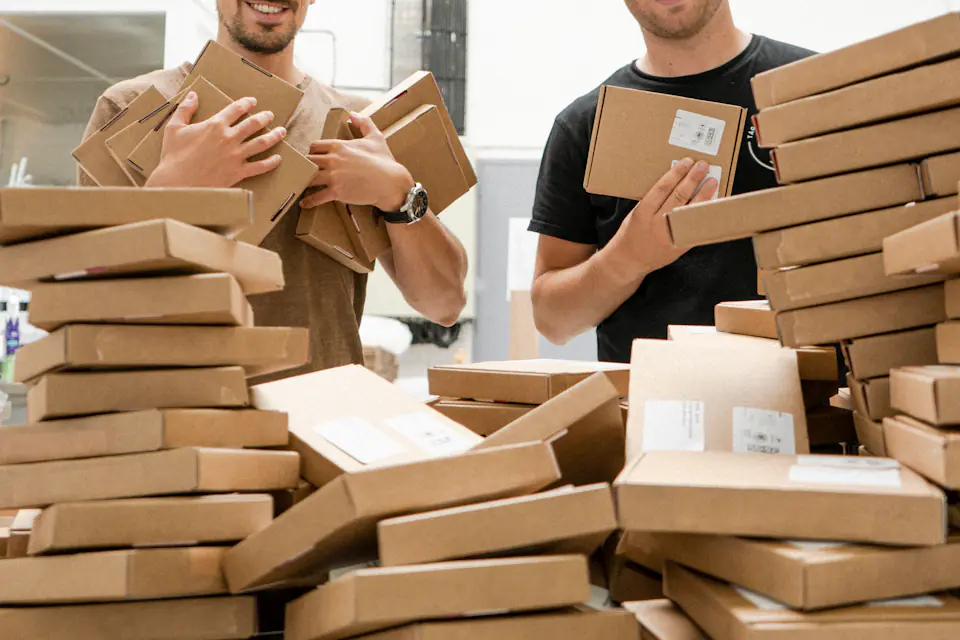
Our packers wrap, box and label your belongings before moving day, so the crew can start loading straight away. Choose a full pack, a part pack or just the breakables, with materials supplied and unpacking available at the other end.
Packing takes longer than almost anyone expects. A three-bedroom house holds a surprising number of boxes once you count the loft, the kitchen cupboards and the shed, and most people only find that out late on the night before the move. Our packing services in Newcastle are there to take that job off you, either completely or in the parts you'd rather not do yourself.
The packers arrive before the removal crew, usually the day before for a full house, and work through the property room by room. Everything is wrapped to suit what it is, boxed at a sensible weight and labelled with the room it's going to. That last part matters more than it sounds. A clearly labelled box goes straight into the right room at the new place, which saves hours on the day and a lot of rummaging afterwards.
You don't need to be moving a long way to make use of it. Plenty of people on short moves around Tyneside book packing for the kitchen alone, because that's the room with the most fragile items, the most odd shapes and the least obvious way to box them.
Packing can be booked for the whole home or just the parts you want help with.
We pack everything going on the van, including cupboards, wardrobes, lofts and garages. You only set aside what's travelling with you.
Pick the rooms or items you want us to handle, such as the kitchen, the books or a home office, and pack the rest yourself.
Glassware, china, mirrors, pictures and ornaments wrapped piece by piece and boxed so nothing can shift.
Double-walled boxes, wardrobe cartons, plain paper, bubble wrap and tape, brought by the packers or available if you're packing yourself.
Each box is marked with its destination room and a short note of what's inside, so you can find the kettle on the first night.
We can unpack at the new property, put things into cupboards and take the empty boxes and used paper away.
The right choice usually comes down to time as much as budget. If you're working full time, have young children or are moving at short notice, a full pack is often the only realistic way to be ready. If you have a few weeks and don't mind some evenings with a tape gun, a part pack covering the awkward rooms gives you most of the benefit.
With a full pack, the packers handle everything that's going on the van. That includes the jobs people tend to put off: the loft, the cupboard under the stairs, the garage shelves and the back of the wardrobe. You set aside anything travelling with you, such as documents, medication, chargers and valuables, and we pack around it. For a family home this is normally done the day before the move so the crew can start loading first thing.
A part pack is booked by room or by type of item. The usual requests are the kitchen, books and records, pictures and mirrors, and home offices with monitors and paperwork. Tell us what you want covered when you ask for a quote, and we'll plan the packing time and materials around just those areas.
Some people are happy to box up clothes, toys and linen but don't want to be responsible for the good china or a glass display cabinet. Fragile-only packing covers glass, ceramics, framed pictures, mirrors, lamps and similar items. Each piece is wrapped individually, and boxes are filled properly so the contents can't move around in transit.
Good packing is mostly about using the right box for the job. Heavy things go in small boxes and light things in big ones, which sounds obvious until you've tried to lift a large carton full of paperbacks. We use double-walled cardboard boxes in a few sizes, plus specialist cartons where they make a real difference.
Plain paper is used for glass and china rather than newspaper, because newsprint rubs off and you end up washing every plate. Plates are packed on their edges rather than flat, as they're stronger that way, and glasses are wrapped one at a time.
Box weight matters even more in some of the older housing around here. In an upper Tyneside flat, every carton has to come down a narrow staircase that starts right behind the front door, and in many terraces the stairs are steep with a tight turn at the top. A box that one person can carry safely down those stairs is a box packed properly.
If you're packing yourself, matching boxes are worth having rather than a mix of supermarket cartons. Odd sizes don't stack, take up more room in the van and slow down loading, which can affect how long the move takes.
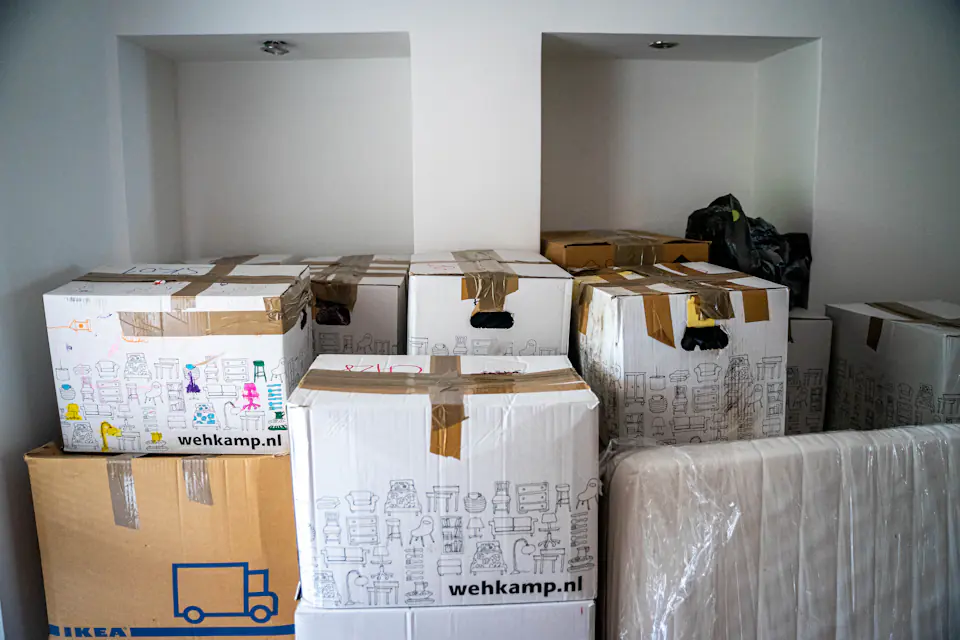
You don't need to tidy before the packers arrive, but a little preparation makes the day quicker. Run down the fridge and freezer, decide what's going to the tip or the charity shop, and keep a box or bag aside for things that must not be packed. Passports, keys, house documents, medication and phone chargers are the usual ones. Label that bag clearly or put it in your car.
If your move involves furniture that has to come apart, such as beds, wardrobes or a large desk, it's worth booking our furniture dismantling and reassembly service at the same time. The packers can empty and wrap the contents, and the crew can then take the pieces apart in the right order. For homes with stairs and lift bookings to plan around, our page on flat and apartment removals covers what to arrange with building management.
Packing is often booked alongside a full house removal, but it doesn't have to be. People moving a room or two of belongings with a man and van sometimes book a few hours of packing for the kitchen and leave the rest. If you're heading out of the region, careful packing matters even more, because boxes spend longer on the road. Our guide to long distance removals explains how those moves are planned.
Unpacking is the part that drags on. It's common to find a stack of boxes in a spare room months after moving in. If you'd like, the packers can unpack at the new property, put kitchenware into cupboards, make up beds and take away the empty boxes and paper, so you're not left flattening cardboard for a week.
You can choose to have only certain rooms unpacked, usually the kitchen and bedrooms, and leave clothes and personal paperwork for yourself. Let us know which rooms you'd like done when you book, as it changes how long the team needs to stay.
The cost of packing depends on how much there is, which rooms are included, the materials needed and whether you want unpacking as well. Our page on what affects removal costs explains how those factors add up, and you can ask for a packing quote with a list of rooms and any items you're worried about.
Send a list of rooms or a short video walk-round, and mention anything fragile, valuable or unusual.
We work out how many packers are needed, how long it should take and which boxes and wrapping to bring.
The packers work room by room, wrapping, boxing and labelling everything with its destination room.
The crew loads the labelled boxes and puts each one in the right room at the new property.
We unpack the rooms you chose and take away the empty boxes and used paper.
Straight answers to the things people ask us most.
We cover Newcastle upon Tyne and the surrounding areas, including Gateshead, Sunderland, Durham, Jesmond, Gosforth, North Shields, Whitley Bay and Cramlington.
It depends on how much is in the home rather than the number of bedrooms alone. A small flat might take a few hours, while a family house is usually packed the day before the move. Lofts, garages and large collections of books or records add time. We can give you a proper estimate once we know what's there, which is why a video walk-round or survey helps.
For packing, no. The packers empty drawers and cupboards as they go. The exception is furniture that's being dismantled, which needs to be empty first, and we'll talk that through with you. It does help to clear out anything you're not taking, because packing things you'll throw away later only adds boxes and time.
We won't pack flammable or hazardous items such as paint thinners, gas bottles, fuel, fireworks or garden chemicals, and they shouldn't travel in a removal van anyway. We'd also ask you to keep cash, jewellery, passports and important documents with you. Perishable food is best used up or given away before moving day.
Yes, you can ask for materials on their own if you're packing yourself. Matching boxes make loading quicker and safer because they stack properly in the van. Tell us roughly how many rooms you're packing and we can suggest a mix of sizes, along with wardrobe cartons and plain paper for anything breakable.
Cover for boxes you pack yourself is often treated differently from items packed by the removal team, and it varies between companies and policies. Before you decide who packs what, ask any remover what goods-in-transit cover applies to owner-packed boxes, and check whether your own home insurance covers your belongings during a move.
If you book unpacking, the team takes the empty boxes and used paper away when they finish. If you're unpacking yourself, ask about collection when you book. Good boxes can usually be used again, and anyone you know with a move coming up is likely to be glad of them.
Most moves use more than one service. These are the ones that pair well with this one.

Full home moves, planned room by room.
Explore house removals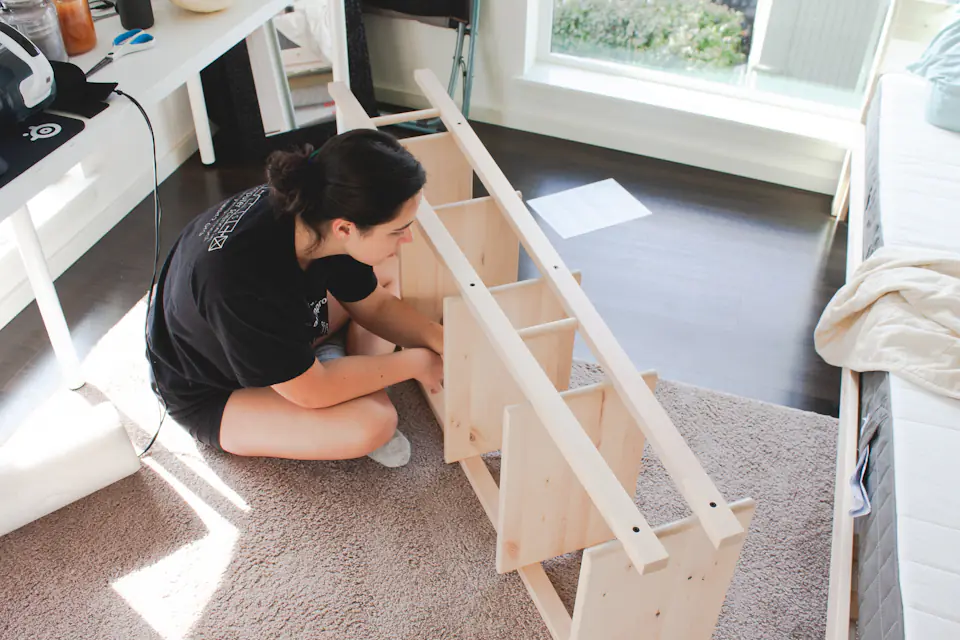
Dismantling and rebuilding on moving day.
Explore furniture assembly
Moves from the North East to anywhere in the UK.
Explore long distance removalsAlso available: office removals, man and van, furniture removals, flat and apartment removals.
Send us a list of the rooms you want packed and we'll come back with a quote and a plan for the day.