
Beds and bunk beds
Wooden and metal frames, headboards, storage beds, bunk beds and cabin beds taken down and rebuilt in the new bedroom.
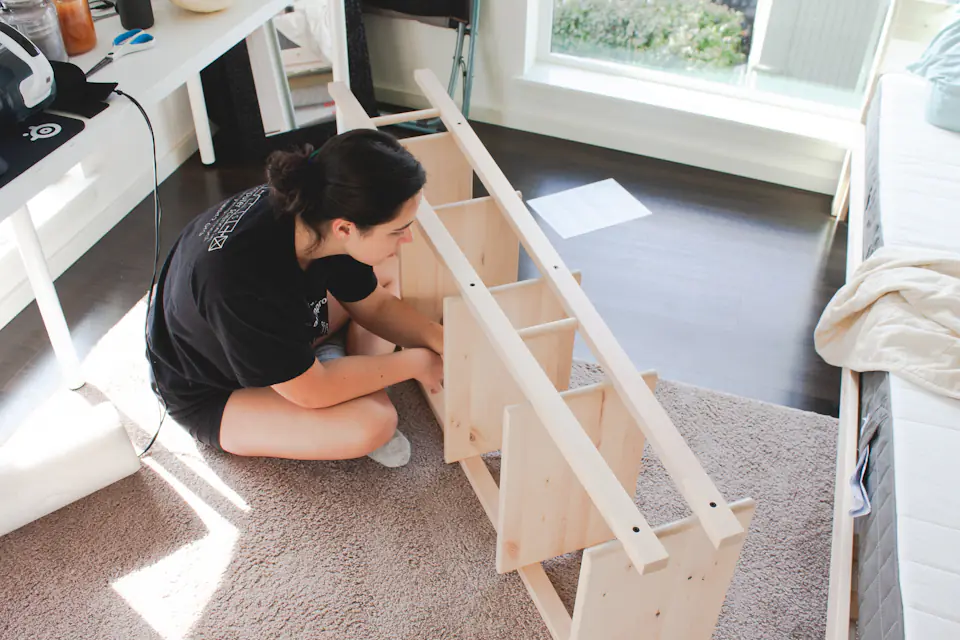
Beds, wardrobes and flat-pack furniture often have to come apart to leave one home and go back together in the next. We take them apart, bag and label every fixing, and rebuild them in the right rooms at your new address.
A surprising amount of furniture won't leave a room in one piece. Beds are the obvious example, but large wardrobes, corner desks, bunk beds and many flat-pack units were built inside the room and can only leave the way they arrived. Our furniture assembly in Newcastle covers both halves of that job: careful dismantling before the move and reassembly afterwards.
Done well, it's quick and unremarkable. Done badly, you're stood in a bedroom at ten at night with a bed frame, a handful of unmarked bolts and no instructions. The difference is mostly in how the pieces and fixings are kept together, which is why everything is labelled as it comes apart.
We also build new flat-pack furniture for people who've just moved in and would rather not spend the first weekend with an Allen key and a set of diagrams.
Most household and home office furniture can be taken apart and put back together.
Wooden and metal frames, headboards, storage beds, bunk beds and cabin beds taken down and rebuilt in the new bedroom.
Freestanding wardrobes, sliding-door units and tall chests that won't fit through a door or round a stair whole.
New flat-pack built from the instructions, or older pieces taken down at one address and put back up at the next.
Cots, cot beds and changing units rebuilt with every fixing checked and tightened.
Home office desks, corner workstations, shelving and modular furniture for small business moves.
Screws, bolts and cam locks bagged and labelled for each item, so nothing gets mixed up between pieces.
Losing one bolt can stop a wardrobe going back up. The most common problem on any dismantling job is mixed-up fixings rather than damage, so most of our process is about keeping each item's parts together.
As each piece comes apart, its fixings go into a sealed bag marked with what it belongs to, such as "main bedroom bed" or "small wardrobe, left door". The bag is taped to the largest panel of that item, so the screws travel with the wood. Panels are wrapped and kept together, and anything that only fits one way, like a shelf or a drawer runner, is marked before it's separated.
If you still have the instructions, keep them with the item or tell us where they are. They aren't essential for most furniture, but they help with unusual designs. Many manufacturers also publish assembly instructions online, which is handy for older flat-pack where the paperwork is long gone.
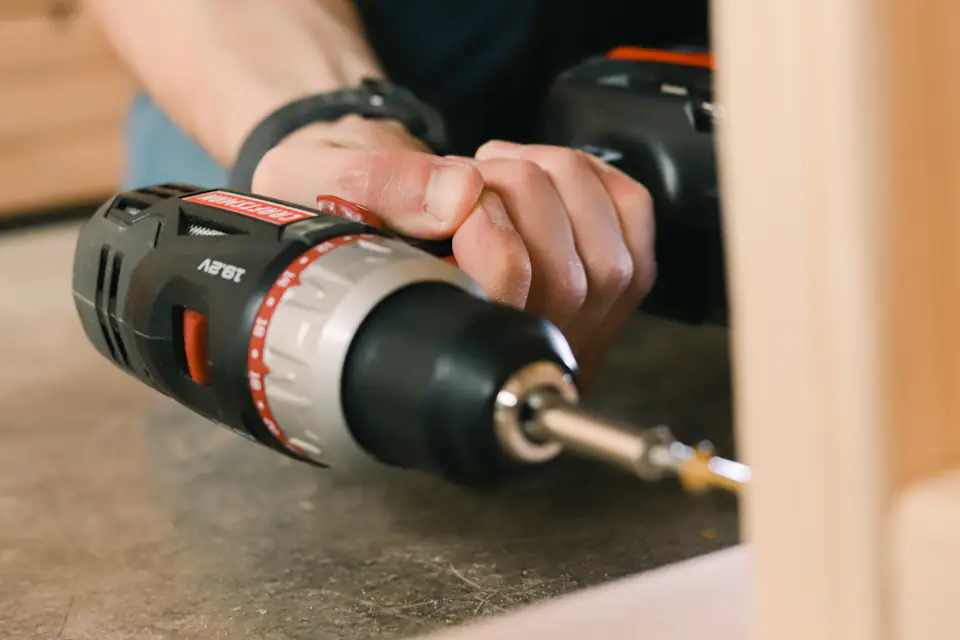
Flat-pack is mostly chipboard, which strips easily if a screw is overtightened, so cordless drivers are kept to a low setting and finished by hand. Cam locks and dowels are checked as they come out, and anything already damaged is pointed out before the move rather than discovered at the other end.
Each type of furniture has its own quirks. These are the ones we deal with most often on moves around Tyneside, Northumberland and County Durham.
Most bed frames come apart fairly quickly once the mattress and bedding are off. Divan bases usually travel whole, with the headboard unbolted. Ottoman and storage beds have gas struts that need handling with care, and bunk beds and cabin beds are taken down fully because they're too tall and awkward to move assembled.
Large flat-pack wardrobes are the item most likely to need taking apart, especially in older terraces and Tyneside flats where staircases are narrow and steep. Sliding doors come off first and are wrapped separately. Wardrobes fixed to the wall with an anti-tip bracket are unfixed before anything else happens.
Cots and cot beds are rebuilt with extra care. Every fixing is checked and tightened, the base is set at the height you ask for, and nothing is left loose. Please check it yourself afterwards as well, against the manufacturer's guidance, before your child sleeps in it.
Corner desks, bookcases, filing units and modular office furniture are dismantled and rebuilt for home offices and small workplaces. If you're moving a whole business, our office removals service plans dismantling around desks, IT and opening hours.
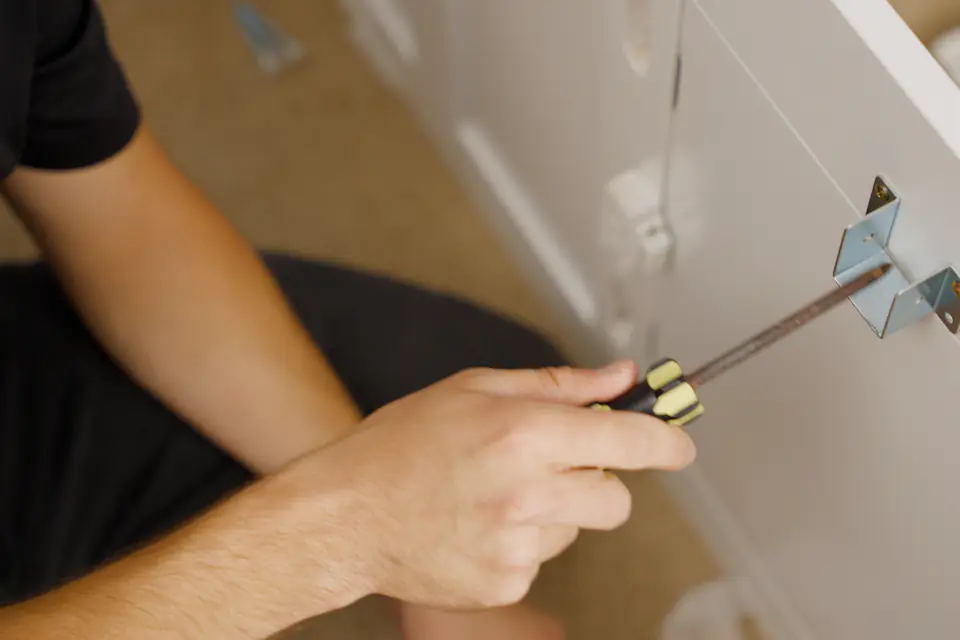
Tall furniture such as wardrobes, bookcases and chests of drawers often comes with a bracket or strap to stop it tipping forward. It should be refitted at the new home, especially where there are young children. We can refit the anti-tip fixings supplied with your furniture. Before drilling we'll ask whether you know of cables or pipes in that wall, and if you're renting, check with your landlord before anything is fixed to the wall.
Some jobs that come up on moving day aren't furniture assembly, and we don't do them. Anything involving gas, electrics or plumbing needs the right qualified tradesperson:
If you're moving a washing machine, find the transit bolts that came with it, or buy a set for your model, and fit them before the move. They stop the drum swinging about in the van. Book any tradespeople for the day before the move if you can, so appliances are disconnected and ready when the crew arrives.
Most people book dismantling and reassembly as part of a removal. On a house removal it's done as part of loading and unloading, so the beds are up before the crew leaves and nobody's sleeping on a mattress on the floor. On flat and apartment moves it's often what makes the job possible at all, because furniture has to fit a lift or a narrow stair.
You can also book furniture assembly on its own, for example to build new flat-pack once you've moved in, or to take apart a bed or wardrobe that someone else is collecting. If furniture is going a long way, dismantling it means it travels flat and wrapped, which is kinder to the panels. Our long distance removals page explains how longer moves are planned, and for single large items rather than a whole home, see furniture removals.
The time needed depends on the number and type of items rather than the size of your home. A list of what needs taking apart or building, with makes, model names or photos where you have them, lets us estimate properly. Our page on what goes into removal costs explains the factors, and you can send us your list of furniture for a quote.
Tell us what needs taking apart or building, with photos or model names if you have them.
Empty wardrobes, drawers and desks, and strip the beds before the crew arrives.
Each item is taken apart, its fixings bagged and labelled, and its panels wrapped together.
Furniture is rebuilt in the room you choose, levelled and checked, with supplied wall brackets refitted.
We go round with you to make sure everything is up, steady and where you want it.
Straight answers to the things people ask us most.
We cover Newcastle upon Tyne and the surrounding areas, including Gateshead, Sunderland, Durham, Jesmond, Gosforth, North Shields, Whitley Bay and Cramlington.
Yes, please. Wardrobes, chests and desks need to be empty before they're dismantled, as the weight of the contents can damage panels and joints. Clothes can go into wardrobe cartons so they stay on their hangers. If you'd rather not do it yourself, our packing team can empty and pack the contents first.
Yes. We can build new flat-pack from the manufacturer's instructions, including beds, wardrobes, drawers, desks and shelving. Tell us the items and brands in advance, as some large wardrobes and storage systems take much longer than others. It helps to have the boxes already in the room where the furniture will stand, with space to lay the panels out.
Usually, but chipboard furniture gets a little weaker each time it's dismantled, especially around cam locks and screw holes. Well-made pieces cope fine. Cheaper items that have already been moved several times may not go back together as firmly. If something looks likely to struggle, we'll say so before we start, so you can decide whether it's worth moving.
No. We don't disconnect gas, electrical or plumbed-in appliances. A gas cooker or gas fire must be disconnected and reconnected by a Gas Safe registered engineer, and hardwired electrical items need a qualified electrician. Washing machines and dishwashers should be disconnected before we arrive, with transit bolts fitted to the washing machine. Once they're disconnected, we can move them.
Our work is taking apart, moving and assembling furniture rather than general fitting. We can refit the anti-tip brackets that come with wardrobes and bookcases, but wall-mounted TVs, floating shelves and anything that needs heavy-duty fixings into plasterboard or masonry are better done by a handyman or joiner who can check the wall properly.
Bagging and labelling fixings as they come out is the best protection against lost parts, but older furniture sometimes has a cracked dowel or a worn cam lock. If that happens, we'll show you and explain the options. Many manufacturers sell replacement fittings, and standard screws and dowels are easy to find at DIY shops.
Most moves use more than one service. These are the ones that pair well with this one.
Single items and bulky pieces moved safely.
Explore furniture removals
Stairs, lifts and tight access handled.
Explore flat and apartment removals
Full home moves, planned room by room.
Explore house removalsAlso available: office removals, man and van, packing services, long distance removals.
Send us a list of the items and we'll tell you roughly how long it should take and what we'll need on the day.