Removals across Newcastle upon Tyne, Tyne and Wear, Northumberland and County Durham.
Durham removals
Removal companies in Durham for the city, colleges and villages
Durham is a small city with awkward geography: a river loop, a hilltop peninsula, cobbles and banks steep enough to slow a loaded trolley. We plan moves here around the slope, the parking and the time of year.
Removals in Durham city and the villages around it
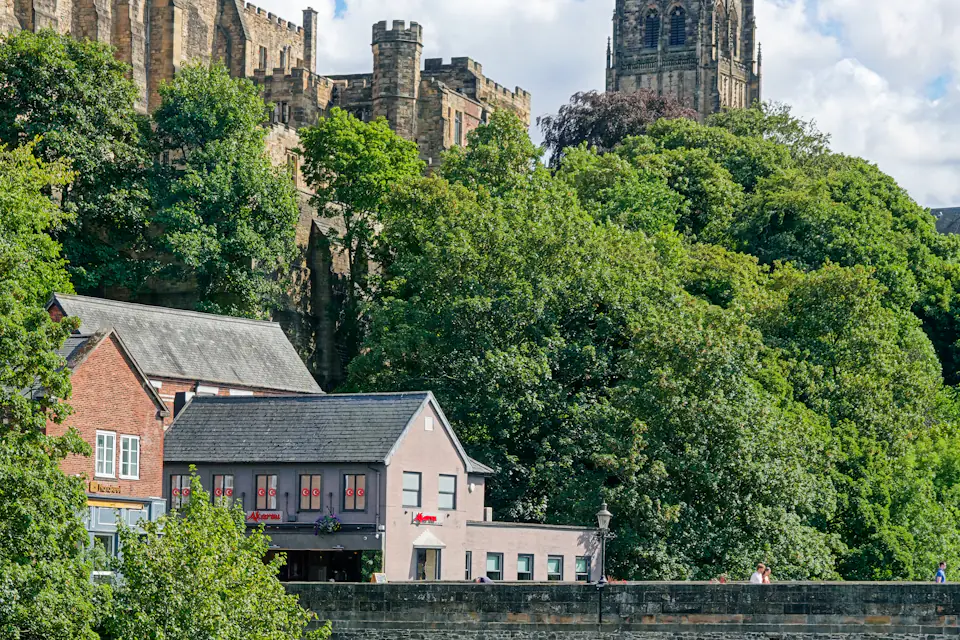
Plenty of the removal companies Durham people ring are based on Tyneside or Teesside, and some treat the city like anywhere else. It is not. The centre sits inside a tight bend of the River Wear, with the cathedral and castle on a raised peninsula and most streets climbing away from the river on every side.
That makes the walk from van to door the main variable on most Durham jobs. A two-bed terrace near the station can take longer to move than a bigger semi in Belmont, simply because of the bank outside and where the van can stop.
We move students, staff, families and people downsizing, both within the city and between Durham and Tyneside. Villages around the city, from Bearpark and Brancepeth to Shincliffe and Sherburn, are part of the same patch.
Durham County Durham · DH1, DH6, DH7
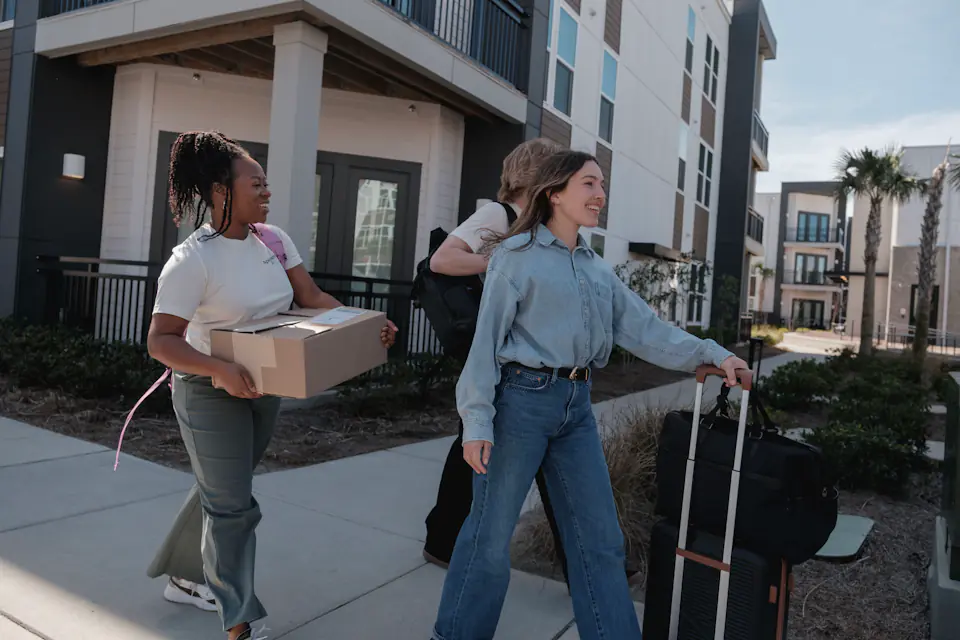
Student moves in Durham peak at the start and end of each academic year.
Moving around Durham
A street-level guide to moving around Durham
Each part of the city brings different problems for a removal crew. These notes cover the areas we are asked about most.
The peninsula and the Bailey
Historic houses, college buildings and a handful of homes along North Bailey and South Bailey, reached on narrow cobbled streets. Vehicle access onto the peninsula is controlled by a road user charge zone, so a large van is rarely practical. We usually plan a smaller vehicle and a longer carry.
Viaduct and Western Hill
Terraced streets on the slopes around the railway viaduct, close to the station and popular with students and young professionals. Some streets are very steep and parking is tight. Many houses have steps up to the front door, which adds time on every trip.
Gilesgate and Claypath
Older terraces on Claypath and Gilesgate Bank give way to larger estates further up the hill. The bank is steep and busy, so we prefer to load from side streets. Shared student houses are common here, which means plenty of small summer moves.
Elvet and Hallgarth Street
Terraces and flats south of the river, close to the Hill colleges on South Road and a short walk from the centre. Streets are narrow and well used by pedestrians, and a lot of houses are let to students. Early starts help before the streets fill up.
Neville's Cross and Crossgate Moor
Semi-detached and detached homes along and off the A167 on the western side of the city. Driveways make loading easier. The A167 itself is busy, so we avoid stopping on the main road.
Framwellgate Moor and Newton Hall
North of the centre, with a large private estate at Newton Hall and older housing around Framwellgate Moor. Cul-de-sacs and shared drives are common. These are usually family moves with lofts and garages to clear.
Belmont and Carrville
Eastern suburbs close to the A1(M), with a mix of older housing and newer estates. Access to the motorway makes these the quickest Durham addresses to reach from Tyneside. Turning space on newer estates can be limited for a big van.
Villages around the city
Bearpark, Brancepeth, Shincliffe, Sherburn and the other villages nearby have stone cottages, former colliery terraces and newer homes on the edges. Lanes are narrow, and some cottages have very low doorways. We often ask for photos of the approach.
Steep streets, cobbles and the peninsula
The defining feature of a Durham move is the gradient. Streets like Gilesgate Bank, Claypath and the roads around the viaduct are steep enough that heavy items need two people on a trolley, one controlling the descent. We bring straps and extra hands when the survey shows a long carry on a bank.
The peninsula is its own case. Durham County Council runs a road user charge zone covering vehicle access onto it, and the streets themselves are narrow, cobbled and shared with a lot of pedestrians. Check the council's current rules before the move, and expect us to recommend a smaller van with more trips rather than a large one that cannot get close.
Elsewhere in the city, ask Durham County Council about any parking restrictions or controlled zones on your street, and whether a temporary suspension is possible. Their process and notice periods can change, so it is worth confirming directly rather than relying on what applied last year.
Student moves and the Durham calendar
Durham is a collegiate university city, and that sets the rhythm of the removals year. Colleges on the Bailey and the Hill, plus shared houses in the Viaduct, Gilesgate and Elvet, all empty and fill around the same few weeks. If your move falls at the end of the summer term or the start of the autumn term, book early.
Most student moves are small: a room's worth of boxes, a desk, a bike and maybe a bed frame. A man and van service suits these well, and a smaller vehicle copes far better with the student streets than a full removals lorry. Shared houses sometimes club together so several people move on the same morning.
Graduates moving to Tyneside are a regular part of the work. If you are heading into a flat, our page on flat removals explains how we handle stairs, lifts and shared entrances. Many end up in Jesmond or Gateshead, and both have parking quirks worth reading about first.
Student moves in Durham peak at the start and end of each academic year.
Routes north and family moves around Durham
The A167 runs north through Framwellgate Moor and Chester-le-Street towards Birtley and Gateshead, and the A1(M) passes just east of the city. Junction 62 at Carrville is the quickest way on for the eastern side; for the western suburbs, the A167 is usually simpler. The A690 links the city with Sunderland, and our Sunderland removals page covers the Wearside end of that route.
Family moves in Newton Hall, Belmont, Neville's Cross and the villages are more conventional, but they still come with lofts, garages and garden furniture. Our packing service is useful for the kitchen and anything fragile, especially if you are working right up to completion day.
For a sense of what drives the price of a Durham move, including the extra time steep carries and small vehicles take, read our guide to removal costs. When you are ready, send us the details and we will look at both addresses before quoting.
Services in Durham
Removal services in and around Durham
What Durham customers book most often, and how each fits the city.
Vehicle access to the peninsula is controlled by Durham County Council's road user charge zone, and the cobbled streets are narrow with heavy foot traffic. A large van is rarely sensible. We usually use a smaller vehicle, park as close as is allowed and carry the rest. Check the council's current rules for the zone before your moving day, as charges and hours can change.
When is the busiest time for student moves in Durham?
The weeks around the end of the summer term and the start of the autumn term are the busiest, when colleges and shared houses turn over at the same time. Tenancies across the Viaduct, Gilesgate and Elvet often start and end on similar dates too. If your dates fall then, book as early as you can and keep your moving window flexible if possible.
How long does it take to move from Durham to Newcastle?
The drive itself is usually under an hour via the A167 or A1(M), though traffic around the Gateshead end can add to that. Most of the day goes on loading and unloading. A small student move can be done in a morning, while a family house with a steep carry may take a full day. We give you a realistic estimate after the survey.
Do you cover the villages around Durham?
Yes. Bearpark, Brancepeth, Shincliffe, Sherburn, Pity Me, Ushaw Moor and the other villages near the city are all part of our normal area. Some have narrow lanes and stone cottages with low doorways, so we may ask for photos of the approach and the front door. Moves between the villages and Tyneside are common, often via the A167 or the A1(M).
Do steep streets make a Durham move cost more?
They can, because they add time rather than distance. A long carry up or down a bank, or the need to use a smaller van with extra trips, means more hours on the job. We look at the street during the survey and price for what we find. Flat, easy streets cost less to work on than steep ones, even over the same distance.
Free, no-obligation quote
Plan your Durham move with us
Tell us where you are moving from and to, including any steep streets or awkward access you already know about, and we will come back with a clear quote.